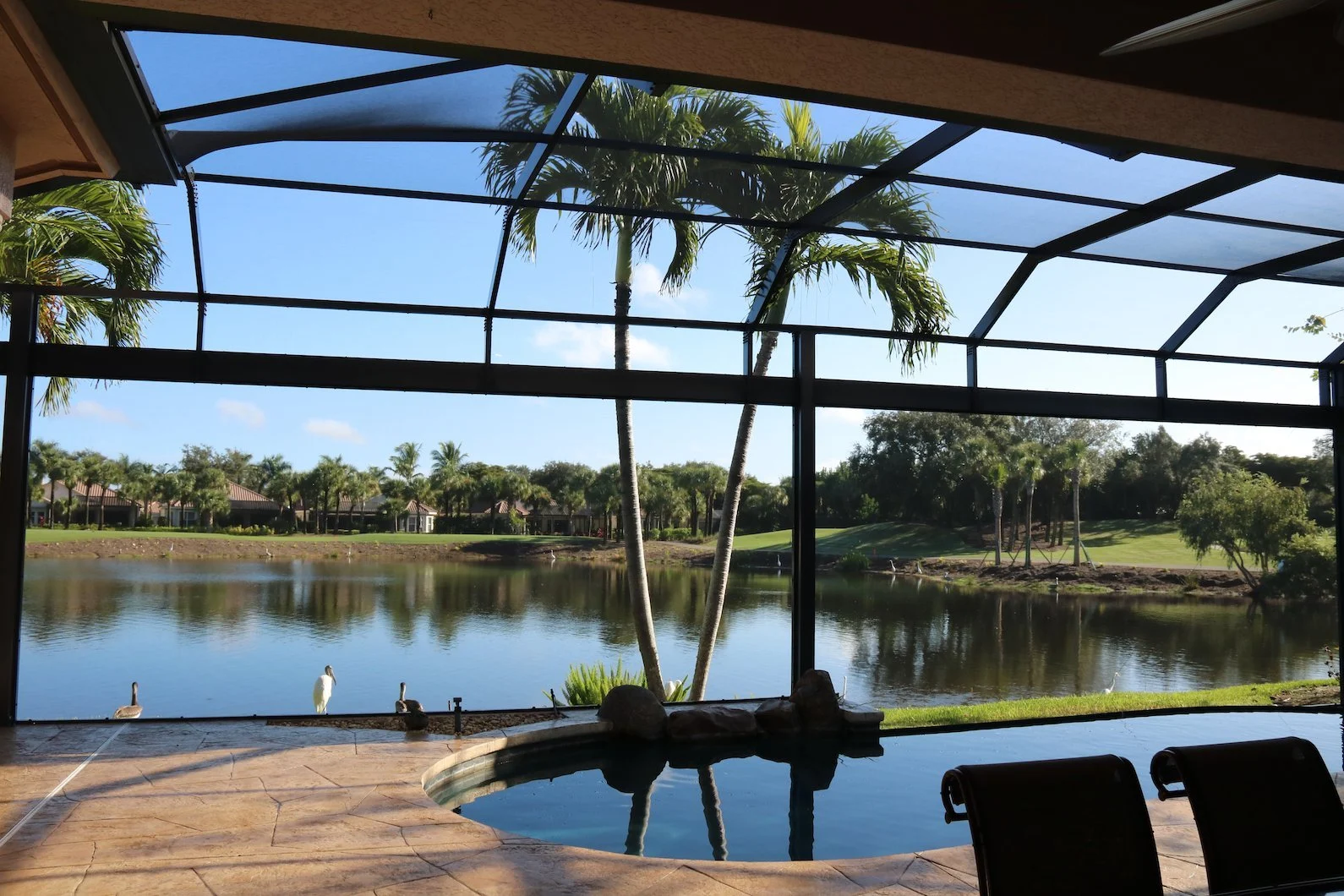
Choosing the Right Screen: A Comprehensive Guide to Screen Types for Patios
Deciding what screen to use is important because not all screen types are created equal. Between color, number of strands, polyester vs fiberglass… a simple decision can easily become overwhelming. We want you to feel confident when speaking to your customers about screen types. So save this information in your back pocket. The most common color of screen is charcoal. It’s the screen color that we offer all our customers. It almost disappears to the eye. The numbers in the screen type name represent the number of strands per inch in each direction. The more strands per inch the smaller the hole size in the screen. The smaller the size of the hole, the less insects can fit through. Secondly, fiberglass and polyester refer to the type of woven fibers that the screen is made from. Fiberglass is more economical and has good visibility but polyester is 3 x stronger than fiberglass and offers excellent visibility. Polyester screens are more durable against wind, and sun.
Here are the most common types of patio screens on the market.
- 18/14 Fiberglass – this is considered the industry standard patio screen.
- 17/14 Polyester – this is the polyester version of the industry standard patio screen. As mentioned above, polyester is 3 x stronger than fiberglass and is more durable against the Florida environment.
- 17/20 Polyester – commonly referred to as small insect screen because it has more strands per inch. The hole size in the screen is smaller than 18/14.
- 20/20 Fiberglass – commonly referred to as ‘No-See-Um’ screen because it has the most strands per inch. It is important to note that juvenile ‘No-See-Ums’ can still fit through this hole size.
- 20/20 Polyester – this is the polyester version of 20/20. It will be more durable than the fiberglass alternative.
- Florida Glass – This is a fiberglass screen dipped in a vinyl coating. It only lets in light providing additional privacy and reducing the debris that can enter your patio area.