Cable railing is often chosen for its modern look, but in coastal environments—and from an installation standpoint—it can introduce long-term challenges that many people don’t see upfront. Horizontal rod railing offers a cleaner, more reliable, and often more cost-effective alternative.
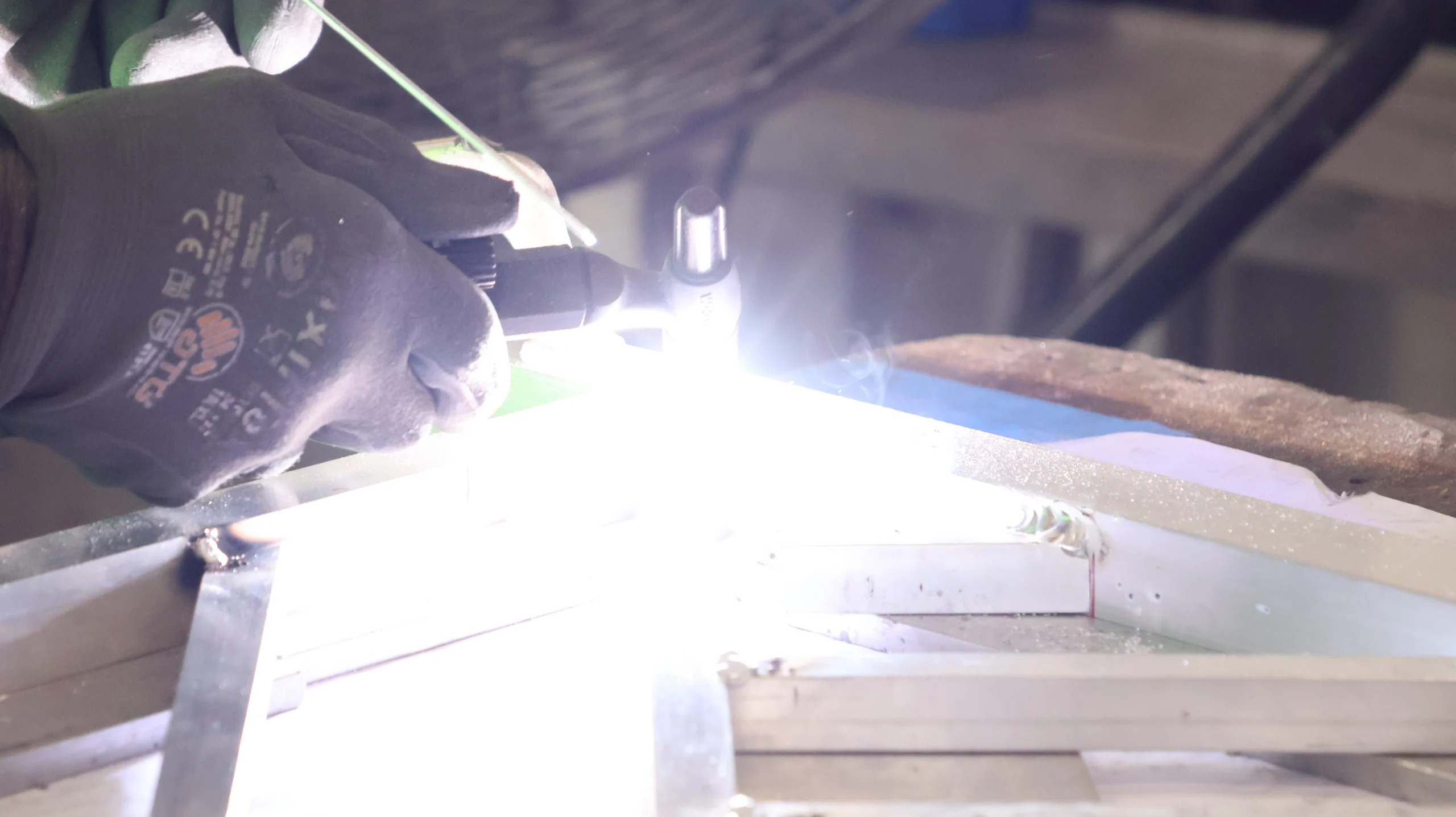
One major advantage is the elimination of dissimilar metals. Cable systems typically combine stainless steel cables with aluminum posts, requiring epoxy primers and isolation methods to slow galvanic corrosion. Even then, these systems are vulnerable over time. Horizontal rod railing avoids this entirely by being fabricated as one fully welded aluminum assembly, removing the need for special primers or field-applied fixes that can fail.
From a finishing standpoint, welded rod railing is also superior. Because the frame and pickets are fabricated as one piece, the entire railing can be powder coated after welding, allowing every joint, corner, and connection to be fully protected. This level of coverage provides enhanced resistance to salt air and environmental exposure—something cable systems can’t achieve once terminals and tensioning hardware are installed.
Horizontal rod railing is also less labor intensive, which often makes it a more affordable option. Cable railing requires precise layout, specialized hardware, tensioning, and—most importantly—angled drilling through posts so the cables run flat and true. This is not a step every aluminum contractor is willing or able to do correctly.
When corners are cut and posts are drilled straight instead of on an angle, the result is visible bends where cables exit the terminal posts—an all-too-common issue that affects both appearance and performance. Rod railing eliminates these risks entirely, delivering clean lines, consistent spacing, and a finished product that looks as good years later as it did on day one.
For projects where durability, appearance, and long-term value matter, horizontal rod railing is a smart upgrade—especially in coastal environments.